The IT Circle: Corma interviewt Ahmed, CEO von CastleBee,



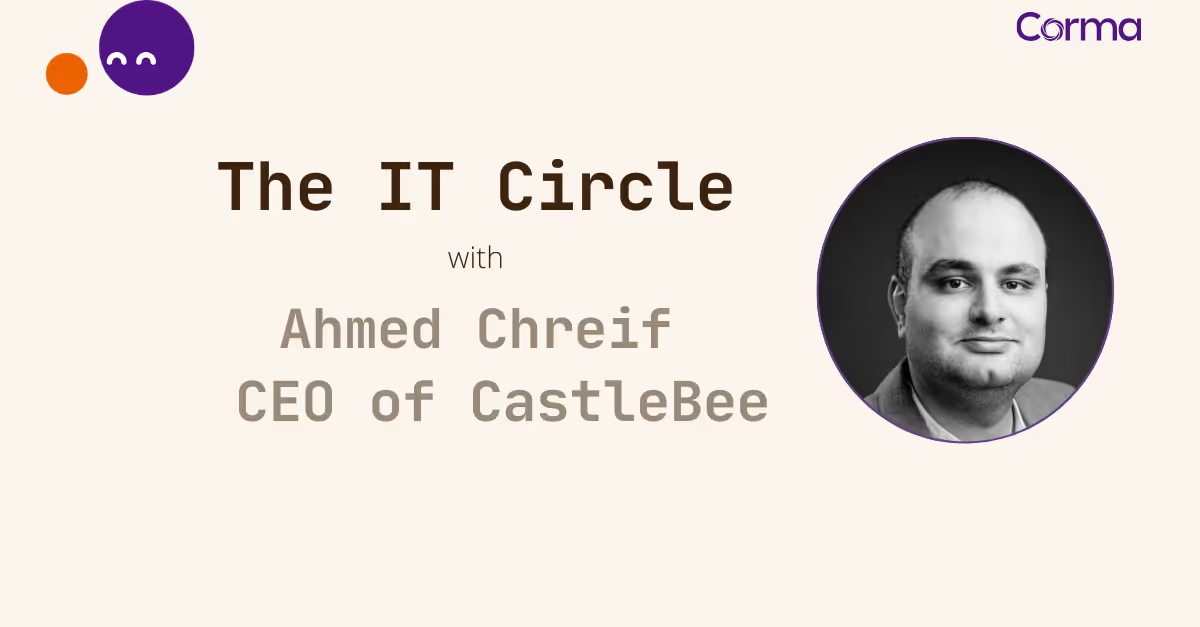
Interview mit Ahmed Chreif
CEO von CastleBee, einem Beratungsunternehmen, das sich auf Daten, Cloud und GDPR spezialisiert hat, um betriebliche Exzellenz voranzutreiben.
In diesem Gespräch erzählt Ahmed von seinen Erfahrungen aus mehr als 10 Jahren in der IT-Beratung und im Unternehmertum. Er erklärt, warum junge Berufstätige über reine technische Fähigkeiten hinausgehen sollten, um sich direkt mit Geschäftsanforderungen auseinanderzusetzen, und warum Entwickler heute Cloud, Daten und Cybersicherheit nicht ignorieren können. Er denkt über ein globales Implementierungsprojekt in mehreren Eramet-Fabriken nach, bei dem Governance, Architektur und Change Management ebenso wichtig waren wie Technologie. Er betont, dass Sichtbarkeit und Kartografie der Anwendungen die Grundlage der Cybersicherheit bilden und dass die IT-Kommunikation von Menschen abhängt, die Veränderungen vulgarisieren, synthetisieren und leiten können. Mit Blick auf die Zukunft warnt er davor, dass CIOs Cyber und die DSGVO von Anfang an „von vornherein“ integrieren müssen, da selbst kleine Unternehmen durch einen einzigen Phishing-Angriff ausgelöscht werden können.
Welchen Rat würden Sie jemandem geben, der 2025 in der IT anfängt?
Nach mehr als zehn Jahren Rekrutierung und Beratung unterschätzen viele junge Absolventen meiner Meinung nach, wie wichtig es ist, die geschäftlicher Bedarf. In der Schule lernen wir Programmiersprachen und technische Stacks, aber nicht, wie man die Bedürfnisse eines Kunden einschätzt und sie in funktionale und technische Ergebnisse umsetzt. Das ist die Fähigkeit, die den Unterschied macht.
Mein erster Rat ist daher, Praktika oder Projekte auszuwählen, bei denen Sie mit Kunden interagieren. Verlassen Sie das rein technische Prisma und setzen Sie sich der Realität aus, Geschäftsanforderungen in konkrete Lösungen umzusetzen.
Zweitens, beschränken Sie sich nicht auf die Entwicklung. Ein Entwickler ist heute Teil einer umfassenderen Architektur, die Cloud, Cyber und Daten umfasst. In diesen Bereichen benötigen Sie zumindest eine grundlegende Kultur: Was ist ETL, wie funktionieren Datenpipelines und Orchestratoren, was sind die Grundlagen von Cybersicherheit und Authentifizierung und was definiert einen Datensatz? Diese sind nicht mehr „extra“, sie sind Teil des Jobs.
💡 „Bleib nicht in der reinen Technik hängen. Verstehen Sie die Geschäftsanforderungen und bauen Sie eine Kultur auf, die Cloud, Daten und Cybersicherheit umfasst.“
Auf welches IT-Projekt sind Sie am meisten stolz und welches hat Sie am meisten herausgefordert?
Das bedeutendste Projekt, das ich geleitet habe, war bei Eramet. Über einen Zeitraum von zwei Jahren haben wir in ihren Fabriken in Frankreich, Norwegen, den USA, Argentinien, Gabun, Senegal und Neukaledonien eine Datenlösung eingeführt. Wir waren ein vierköpfiges Team von CastleBee, und ich war Programmdirektor mit einem Projektmanager und Entwicklern.
Wir mussten eine standardisierte Datenarchitektur entwerfen, Governance implementieren, lokale Teams schulen und das Change Management übernehmen. Wir gingen in Schutzausrüstung vor Ort, beobachteten, wie die Werksteams arbeiteten, und passten die Lösung an jeden Standort an. Am Ende war die Lösung in allen Fabriken verfügbar, einschließlich einer brandneuen Lithium-Produktionsanlage in Argentinien, die nach umweltfreundlicheren Prozessen konzipiert wurde. Dieses Projekt war nicht nur technisch komplex, sondern auch strategisch wichtig für die französische Lithium-Innovation.
💡 „Wir gingen von Standort zu Standort, in Fabriken auf der ganzen Welt, schulten Teams, kümmerten uns um die Verwaltung und implementierten eine Live-Datenlösung, die heute noch läuft.“
Welche Auswirkungen wird KI auf SaaS-Umgebungen haben, die bereits komplex sind?
Es gibt keine allgemeingültige Antwort. Es gibt unzählige SaaS-Anwendungen, und nicht alle benötigen KI. Die richtige Frage lautet: Für welchen Anwendungsfall, auf welcher Ebene und um welches Problem anzugehen?
Letzten Endes repliziert SaaS Geschäftsprozesse in digitaler Form. Wenn KI diese Prozesse beschleunigen oder vereinfachen kann, hat sie einen Wert. Aber man braucht nicht immer einen „intelligenten Hammer“, um eine Fliege zu töten. Manche Aufgaben werden massiv davon profitieren, andere kaum. Für mich ist es von Fall zu Fall.
💡 „KI wird sich sicherlich auf SaaS auswirken, aber nicht überall und nicht auf die gleiche Weise. Es ist immer von Fall zu Fall.“
Wie haben Sie gesehen, wie sich die Einführung von SaaS in den letzten über 10 Jahren entwickelt hat?
Das Muster ist immer dasselbe: Early Adopters, Mainstream und Nachzügler. Vor zehn Jahren investierten einige Unternehmen wie AXA auf der Datenseite zig Millionen. Sie scheiterten zunächst daran, dass sie sich nur auf Technologie konzentrierten, ohne sich an den geschäftlichen Anwendungsfällen und dem ROI auszurichten. Damals herrschte eine „magische“ Aura rund um Daten und KI, mit der Idee, dass Ausgaben allein Ergebnisse garantieren würden.
Ab 2017 begannen Cloud-Technologien, ETL und Spark zu reifen und zu demokratisieren. Dies führte zu einer echten Akzeptanz in allen Branchen, vom Bankwesen über den Einzelhandel bis hin zur Logistik. Bis 2025 ist der Reifegrad viel höher. Viele Unternehmen sprechen heute von Datennetzen, datengesteuerten Modellen und Cloud-nativen Stacks. Natürlich gibt es immer noch Nachzügler. Einige Einzelhändler holen beispielsweise erst jetzt auf.
Was KI angeht, glaube ich, ist es heute dort, wo Daten vor zehn Jahren waren. Es gibt einen Hype, Experimente und Investitionen, aber es mangelt immer noch an Klarheit über den tatsächlichen ROI.
Warum ist der Überblick über die Anwendungslandschaft so wichtig?
Es ist absolut entscheidend. Jeder CIO arbeitet heute daran. Was Sie nicht sehen können, können Sie nicht sichern. In den meisten großen Unternehmen, mit denen ich zusammengearbeitet habe, gibt es jedoch keine echten Kartografien des Informationssystems. Wissen ist in den Köpfen der Menschen verstreut und nicht in Dashboards formalisiert.
Der erste Schritt im Bereich Cybersicherheit besteht darin, eine klare, gemeinsame Karte von Anwendungen, Datenströmen und Benutzern zu erstellen. Dann kommt der Faktor Mensch: Schulung der Mitarbeiter zur Vermeidung von Phishing und riskantem Verhalten. Rund 80 Prozent der Vorfälle sind auf menschliches Versagen zurückzuführen.
In vielen meiner Kundenmissionen gibt es einfach keine echte Anwendungstransparenz. In einigen Fabriken entdecken wir immer noch Formen von Schatten-IT die sich der offiziellen Kontrolle entziehen. Das ist die Realität: Ohne Sichtbarkeit ist man blind.
💡 „Der erste Schritt der Cybersicherheit ist Sichtbarkeit. Was Sie nicht sehen können, können Sie nicht sichern.“
Was sind Best Practices für die IT-Kommunikation mit dem Rest des Unternehmens?
Kommunikation bedeutet vulgarisieren und synthetisieren. IT-Teams brauchen Leute, die Veränderungen leiten können, nicht nur Techniker, die Fachjargon sprechen. Projektmanager oder Produkteigentümer in der IT-Abteilung zu haben, die wissen, wie man mit Geschäftsteams spricht, macht den Unterschied. Die Schulung des IT-Personals zur Kommunikation und zum Vorantreiben von Veränderungen sollte eine Priorität sein.
Wie wird die Rolle des CIO in fünf Jahren aussehen?
Es wird nicht einfach sein. Das Tempo des technologischen Wandels bedeutet, dass sich CIOs mit mehr Themen als zuvor befassen müssen, insbesondere mit Cyberfragen und der DSGVO. Sie können heute kein Unternehmen gründen, ohne diese „von Grund auf“ aufzubauen. Kleine und mittlere Unternehmen können durch einen Phishing-Angriff buchstäblich aus dem Geschäft gedrängt werden.
Deshalb glaube ich, dass der CIO von morgen von Anfang an Compliance, Sicherheit und Data Governance integrieren muss. Gleichzeitig müssen sie kontinuierlich lernen, da das, was heute auf dem neuesten Stand der Technik ist, in zehn Jahren überholt sein kann.
💡 „CIOs können Cyber und die DSGVO nicht länger ignorieren. Diese müssen vom ersten Tag an planmäßig eingebaut werden.“
%20acquired%20by%20Workday.avif)
Workday will C1 übernehmen: Was das für ConductorOne-Kunden bedeutet

Freshworks will Torii übernehmen: Was sich ändert und wie Sie wechseln

JumpCloud Preise 2027: Pakete, Grenzen des Free Tiers und echte Kosten pro Nutzer
The new standard in license management
Sind Sie bereit, Ihre IT-Governance zu revolutionieren?