ISO 27001 et IAM : guide complet de mise en œuvre pour la conformité à la sécurité de l'information



Conformité à la norme ISO 27001 avec IAM automatisé
ISO 27001 et la gestion des identités et des accès (IAM) forment un partenariat indissociable en matière de sécurité de l'information moderne. La norme reconnue au niveau international impose aux organisations de mettre en œuvre des systèmes IAM robustes en tant que composant fondamental de leur système de gestion de la sécurité de l'information (ISMS), avec des contrôles spécifiques de l'annexe A régissant directement la manière dont les identités numériques sont créées, authentifiées et autorisées tout au long de leur cycle de vie.
Ce guide couvre les exigences de gestion des identités ISO 27001, les stratégies pratiques de mise en œuvre de l'IAM et les approches de conformité pour obtenir et maintenir la certification. Une gestion de projet structurée est essentielle à la réussite de la mise en œuvre de la norme ISO 27001, en garantissant que les tâches sont clairement définies et que les délais sont respectés. Professionnels de la sécurité, responsables de la conformité et administrateurs informatiques à la recherche Certification ISO 27001 trouvera des conseils pratiques pour créer des systèmes qui satisfont les auditeurs tout en protégeant véritablement les données de l'organisation.
Réponse directe : L'IAM est essentielle à la conformité à la norme ISO 27001, les contrôles de l'annexe A 5.16 (Gestion des identités), 5.17 (Informations d'authentification) et 5.18 (Droits d'accès) établissant des exigences obligatoires pour la gestion des identités des utilisateurs, la protection des informations d'identification et le contrôle de l'accès aux installations de traitement de l'information.
Dans le cadre de votre parcours vers la norme ISO 27001, il est important de sélectionner un organisme de certification réputé et de comprendre le processus de certification, y compris les phases et les étapes nécessaires à l'obtention et au maintien de la certification.
À la fin de ce guide, vous aurez compris :
- Comment les contrôles de l'annexe A de la norme ISO 27001 régissent spécifiquement la gestion des identités et des accès
- Méthodologies de mise en œuvre pour créer des systèmes IAM conformes
- Approches techniques pour le contrôle d'accès basé sur les rôles et l'authentification multifactorielle
- Résultats d'audit courants et solutions éprouvées pour faire face aux risques
- Stratégies visant à maintenir une conformité continue et à améliorer la posture de sécurité
Comprendre le système de gestion de la sécurité de l'information ISO 27001 et la gestion de l'accès aux identités
Un système de gestion de la sécurité de l'information conforme à la norme ISO 27001 fournit un cadre complet pour gérer systématiquement les risques liés à la sécurité de l'information par le biais de contrôles organisationnels, humains, physiques et technologiques. La norme impose aux organisations d'identifier les actifs, d'évaluer les menaces et d'appliquer des contrôles proportionnés, un processus dans lequel l'IAM constitue le principal mécanisme d'application de la confidentialité, de l'intégrité et de la disponibilité des ressources protégées. La définition de la portée de l'ISMS est cruciale pour garantir une mise en œuvre efficace et un alignement avec les objectifs commerciaux, en veillant à ce que l'ISMS soutienne les objectifs stratégiques de l'organisation.
La gestion des identités et des accès va bien au-delà des simples comptes utilisateurs. Il englobe les politiques, processus et technologies régissant l'identité numérique tout au long de son cycle de vie, de la création de l'identité à la mise hors service éventuelle. Dans le cadre de l'ISMS, les organisations doivent également identifier les parties intéressées et leurs exigences afin de garantir que les besoins des parties prenantes sont pris en compte. Cette approche du cycle de vie garantit que seuls les utilisateurs autorisés accèdent à des ressources spécifiques au moment opportun, atténuant ainsi directement les menaces internes, les abus de privilèges et les accès externes non autorisés susceptibles d'entraîner des violations de données.
Le lien entre la gestion des risques ISO 27001 et les contrôles de sécurité IAM est structurel : l'évaluation des risques identifie ce qui doit être protégé, tandis que les systèmes IAM mettent en œuvre cette protection en contrôlant qui peut accéder à quoi, quand et dans quelles conditions. Une méthodologie claire d'évaluation des risques est essentielle pour identifier et évaluer systématiquement les risques, en garantissant des résultats valides et exploitables.
Contrôles d'identité ISO 27001 Annexe A
Annexe A 5.16 (Gestion de l'identité) oblige les entreprises à gérer le cycle de vie complet des identités à l'aide de processus formels d'enregistrement des utilisateurs, notamment des identifiants uniques et une gestion des accès privilégiés. Chaque personne interagissant avec les systèmes organisationnels doit disposer d'une identité numérique vérifiable et traçable liée à des mécanismes de responsabilisation. Il est essentiel de mettre en œuvre des contrôles adaptés au profil de risque de l'organisation afin de garantir une gestion efficace de l'identité.
Annexe A 5.17 (Informations d'authentification) impose la protection des informations d'identification grâce à des processus d'allocation contrôlés, à un stockage sécurisé et à la sensibilisation des utilisateurs à une gestion appropriée. Ce contrôle englobe les systèmes de gestion des mots de passe, le déploiement de l'authentification multifactorielle et la protection contre la compromission des informations d'identification qui entraîne fréquemment des violations de données.
Annexe A 5.18 (Droits d'accès) régit l'autorisation, c'est-à-dire l'octroi de l'accès à des autorisations spécifiques en fonction de besoins commerciaux légitimes. Les organisations doivent établir des politiques de contrôle d'accès documentées, mettre en œuvre des procédures de contrôle d'accès et maintenir des mécanismes de révision périodique et de révocation des droits d'accès. La mise en œuvre de contrôles et de politiques appropriés est cruciale pour garantir une gestion efficace des accès et la conformité aux exigences de la norme ISO 27001.
Ces trois contrôles forment une chaîne interdépendante : la gestion des identités permet de déterminer qui sont les utilisateurs, l'authentification vérifie cette demande d'identité et les droits d'accès déterminent ce que les utilisateurs authentifiés peuvent faire. La faiblesse d'un lien compromet l'ensemble du cadre de gestion des accès, ce qui met en évidence la nécessité de mettre en œuvre des politiques qui soutiennent ces contrôles.
Principes IAM dans le contexte de la norme ISO 27001
Le principe « une personne, un identifiant unique » élimine les identités partagées qui masquent la responsabilité. Lorsque des incidents de sécurité se produisent, les organisations doivent retracer les actions jusqu'à des individus spécifiques, ce qui est impossible lorsque les identifiants utilisateur sont partagés entre plusieurs membres du personnel. Cela s'étend aux identités non humaines telles que les comptes de service et les informations d'identification d'API, qui nécessitent une gestion du cycle de vie similaire.
La gestion complète du cycle de vie des identités traite de l'identité depuis sa création initiale jusqu'à sa mise hors service éventuelle. Cela inclut la vérification de l'identité avant la délivrance des informations d'identification, la recertification périodique de la nécessité d'un accès continu et la révocation sécurisée en cas de changement de rôle ou de fin d'emploi. Les chefs de département et la haute direction devraient participer activement à l'approbation et à la révision des droits d'accès lors de la recertification afin d'assurer la supervision et l'alignement avec les objectifs organisationnels. Les organisations qui font état d'une gestion efficace du cycle de vie détectent les comptes orphelins 50 % plus rapidement que celles utilisant des approches ad hoc.
La séparation des tâches et l'accès au moindre privilège garantissent que l'accès accordé correspond aux fonctions du poste sans autorisations excessives permettant des actions non autorisées. La haute direction joue un rôle clé dans l'application de ces principes afin de maintenir la responsabilité et de prévenir les conflits d'intérêts. Ces principes soutiennent directement l'intégrité des données et empêchent les points de compromission isolés de dégénérer en violations à l'échelle de l'entreprise.
Une fois ces concepts fondamentaux établis, la compréhension des exigences de contrôle spécifiques permet une planification pratique de la mise en œuvre.
Système de gestion de la sécurité de l'information (ISMS)
Un système de gestion de la sécurité de l'information (ISMS) est la pierre angulaire d'une stratégie de sécurité de l'information robuste, fournissant un cadre structuré pour la gestion et la protection des données sensibles dans l'ensemble de l'organisation. Construit sur les principes de la norme ISO 27001, un ISMS permet aux entreprises d'identifier, d'évaluer et de gérer systématiquement les risques liés à leurs actifs informationnels, en veillant à ce que des mesures appropriées soient mises en place pour prévenir les violations de données et maintenir la continuité des activités.
À la base, un ISMS est un système de gestion complet qui intègre des politiques, des procédures et des contrôles de sécurité conçus pour protéger la confidentialité, l'intégrité et la disponibilité des informations. Cette approche proactive protège non seulement les données contre l'évolution des cybermenaces, mais aide également les entreprises à démontrer leur conformité aux obligations légales, réglementaires et contractuelles.
La mise en œuvre d'un ISMS implique un cycle continu d'évaluation des risques, de planification du traitement des risques et d'activités de surveillance continues. En revoyant et en mettant à jour régulièrement les contrôles de sécurité, les entreprises peuvent s'adapter aux nouvelles menaces et vulnérabilités, en veillant à ce que leur posture de sécurité des informations reste efficace au fil du temps. Le cadre ISMS met également l'accent sur l'importance de l'engagement des dirigeants, des programmes de sensibilisation des employés et une documentation claire, qui sont tous essentiels pour favoriser une culture de sécurité dans l'ensemble de l'entreprise.
En fin de compte, un ISMS efficace aide les entreprises à obtenir la certification ISO 27001, en garantissant aux clients, aux partenaires et aux parties prenantes que les données sensibles sont gérées de manière responsable et sécurisée. En intégrant la sécurité des informations dans tous les aspects des processus métier, un ISMS aide non seulement les organisations à gérer les risques, mais leur confère également un avantage concurrentiel dans le paysage actuel axé sur les données.
Exigences de contrôle IAM ISO 27001
S'appuyant sur les principes fondamentaux de l'identité, la norme ISO 27001 établit des exigences détaillées pour chaque phase de gestion de l'accès des utilisateurs. Ces exigences traduisent des objectifs de sécurité abstraits en contrôles vérifiables et implémentables. Il est essentiel de suivre un processus de mise en œuvre structuré et de tenir à jour chaque document requis conformément à la norme ISO 27001, en veillant à ce que tous les enregistrements formels soient complets et à jour. Tout au long de la mise en œuvre, les organisations doivent également recueillir des preuves d'audit pour démontrer la conformité et soutenir la certification.
Gestion des identités et contrôles du cycle de vie
La création d'identité nécessite une justification commerciale documentée et des processus d'approbation formels avant d'établir une identité numérique. Cela empêche le personnel non autorisé d'accéder au système et crée des pistes d'audit démontrant l'autorisation appropriée pour chaque compte utilisateur. Il est essentiel d'appliquer le contrôle de version à toute la documentation relative à l'identité afin de conserver des enregistrements exacts et à jour et de garantir la préparation à l'audit.
Les procédures de vérification d'identité doivent confirmer l'identité réelle avant l'émission d'une identification numérique. Pour les employés, cela s'intègre généralement à l'intégration des ressources humaines ; pour les sous-traitants et les partenaires, des étapes de vérification documentées garantissent que les identités revendiquées correspondent à des personnes réelles entretenant des relations commerciales légitimes.
La maintenance de l'identité comprend des exigences de recertification périodiques au cours desquelles les propriétaires d'entreprise confirment qu'ils ont toujours besoin d'un accès. Les organisations qui mènent des campagnes trimestrielles de recertification des accès identifient 20 à 30 % des accès qui devraient être supprimés, ce qui démontre la valeur de conformité continue des examens réguliers. Dans le cadre de ce processus, la tenue d'un registre des risques pour documenter les risques identifiés et l'élaboration d'un plan de traitement des risques décrivant la manière dont ces risques seront gérés sont essentielles pour une gestion des risques efficace et la conformité à la norme ISO 27001.
La mise hors service de l'identité garantit la révocation sécurisée des informations d'identification lorsque l'accès n'est plus approprié. Les prestataires de soins de santé conformes à la norme HIPAA et à la norme ISO 27001 mettent en œuvre des flux de travail révoquant l'accès dans les 24 heures suivant les changements de personnel, empêchant ainsi les violations de l'accès persistant à des données sensibles.
Cadre de politique de contrôle d'accès
Des politiques de contrôle d'accès documentées, alignées sur les exigences de l'entreprise, constituent le fondement de la gouvernance de tous les processus de gestion des accès. Ces politiques définissent qui peut autoriser l'accès, quels critères justifient l'octroi de l'accès et comment les exceptions sont gérées et documentées. Il est également important d'inclure des clauses de sécurité explicites dans les contrats avec des fournisseurs tiers afin de garantir que les partenaires externes respectent les exigences de sécurité de votre organisation et respectent la norme ISO 27001.
Mise en œuvre du contrôle d'accès basé sur les rôles offre une évolutivité aux organisations qui gèrent des milliers d'identités d'utilisateurs. Plutôt que d'attribuer des autorisations individuellement, le RBAC associe les fonctions des tâches aux ensembles d'autorisations, garantissant un accès cohérent entre des rôles similaires tout en simplifiant la documentation d'audit. Un RBAC efficace doit aborder la gestion des informations et des actifs physiques afin d'atténuer les risques de sécurité pour tous les types d'actifs.
La gestion des accès privilégiés nécessite des contrôles et une surveillance améliorés pour les comptes dotés d'autorisations élevées. L'élévation des privilèges juste à temps, l'accès limité dans le temps et la journalisation améliorée des sessions privilégiées permettent de réduire le risque accru que ces comptes présentent pour les actifs informationnels. Outre les contrôles techniques, les organisations doivent mettre en œuvre des contrôles de sécurité physiques, tels que des restrictions d'accès et des systèmes de détection d'intrusion, afin de mieux protéger les zones sensibles et de se conformer aux exigences de la norme ISO 27001.
Contrôles d'authentification et d'autorisation
Les exigences d'authentification multifacteur pour les systèmes critiques sont devenues la norme en matière de conformité à la norme ISO 27001. L'accent mis par l'édition 2022 sur les menaces modernes reconnaît que l'authentification par mot de passe uniquement ne permet pas de compromettre les informations d'identification, ce que le rapport d'enquêtes sur les violations de données de Verizon identifie comme étant à l'origine de 80 % des violations.
Les systèmes de gestion des mots de passe doivent protéger les informations d'authentification grâce à un stockage sécurisé, à des politiques de rotation et à une formation des utilisateurs sur la gestion appropriée des informations d'identification. Les programmes de sensibilisation à la sécurité de l'information devraient considérer l'hygiène des mots de passe comme un aspect essentiel de la défense de l'organisation.
Mise en œuvre de l'authentification unique dans le cadre de la norme ISO 27001, réduit la fatigue liée aux informations d'identification tout en préservant la sécurité. Le SSO permet aux utilisateurs autorisés d'accéder à plusieurs applications avec une authentification unique, ce qui réduit la réutilisation des mots de passe qui crée des vulnérabilités.
Points clés : Les contrôles du cycle de vie des identités, les politiques de contrôle d'accès et les mécanismes d'authentification constituent des couches interdépendantes. La sécurité du réseau est également un élément crucial du cadre global de contrôle d'accès, garantissant que les informations et l'infrastructure de l'organisation sont protégées contre tout accès non autorisé. Les faiblesses dans tous les domaines sont à l'origine de résultats d'audit et de véritables failles de sécurité.
Une fois les exigences de contrôle comprises, la méthodologie de mise en œuvre fournit la voie pratique à suivre.
Mise en œuvre de systèmes IAM conformes à la norme ISO 27001
Traduire les exigences de la norme ISO 27001 en systèmes iam opérationnels nécessite une méthodologie structurée. Les organisations qui débutent la certification ISO 27001 ou qui mettent à niveau la gestion des accès existante doivent suivre des approches systématiques qui répondent à la fois aux exigences d'audit et aux véritables objectifs de sécurité. Traiter la mise en œuvre de la norme ISO 27001 comme un projet de certification permet de garantir un plan clair, et les organisations peuvent faire appel à un consultant externe pour identifier les lacunes dans les processus ou les compétences, rationalisant ainsi le chemin vers la conformité.
Méthodologie de mise en œuvre IAM
Les organisations doivent suivre cette méthodologie lors de la mise en place ou de la mise à niveau des fonctionnalités de gestion des identités pour se conformer à la norme ISO 27001 :
- Réaliser une évaluation des risques et une analyse des lacunes de l'IAM conformément aux exigences de la norme ISO 27001, en identifiant les domaines dans lesquels les processus actuels de gestion des accès ne répondent pas aux contrôles de l'Annexe A et les risques de sécurité des informations liés au traitement actuel des identités. Dans le cadre de cette évaluation initiale, suivez un processus structuré de gestion des risques pour identifier et évaluer les risques, y compris ceux associés à des fournisseurs tiers, et les documenter dans un registre des risques. Cela garantit une approche définie pour évaluer les menaces, les vulnérabilités et l'efficacité des contrôles actuels.
- Cadre de gouvernance des identités de conception avec des politiques et des procédures couvrant chaque phase du cycle de vie, garantissant que les approches documentées en matière de création d'identité, de gestion des accès et de mise hors service sont conformes aux objectifs de protection des données de l'organisation.
- Déployez un fournisseur d'identité (IdP) centralisé et des services d'annuaire établir des sources d'identité fiables qui éliminent les comptes utilisateurs éparpillés sur les différents systèmes et jettent les bases d'un contrôle d'accès cohérent.
- Mettre en œuvre des flux de travail de provisionnement et de déprovisionnement automatisés en connectant les événements du cycle de vie des identités aux modifications d'accès, en veillant à ce que l'accès accordé corresponde aux rôles actuels et à ce que la révocation soit effectuée rapidement lorsque les circonstances changent.
- Configuration des contrôles d'accès et des systèmes de gestion des privilèges mettre en œuvre un contrôle d'accès basé sur les rôles, une gestion des accès privilégiés et des politiques basées sur les attributs pour un accès sécurisé aux informations sensibles.
- Mettre en place des fonctionnalités de surveillance, de journalisation et de piste d'audit en permettant la détection des incidents de sécurité, en soutenant des audits internes réguliers et en fournissant des preuves pour les audits de certification démontrant une conformité continue.
- Mettre en place des procédures de réponse aux incidents dans le cadre du système ISMS, s'assurer que des contrôles et des politiques documentés sont en place pour se préparer et répondre efficacement aux incidents de sécurité.
Critères de sélection de la technologie IAM
Le choix entre les approches dépend du contexte organisationnel. Les secteurs fortement réglementés préfèrent souvent les solutions sur site offrant un contrôle complet, tandis que les organisations qui accordent la priorité à un déploiement rapide et à une maintenance réduite considèrent l'IAM basée sur le cloud comme un investissement stratégique permettant d'accélérer les processus de certification. Lors de la sélection d'une solution, il est essentiel de prendre en compte les exigences légales et les obligations légales afin de garantir la conformité aux réglementations et normes pertinentes.
Les sociétés de services financiers qui mettent en œuvre une IAM conforme à la norme ISO 27001 dans des environnements cloud hybrides ont intégré des inventaires d'actifs à des plateformes telles qu'Okta ou SailPoint, automatisant le RBAC et réduisant les incidents d'accès non autorisés de 65 % dès la première année, tout en respectant la conformité avec une charge administrative réduite.
Les défis de mise en œuvre affectent même les projets bien planifiés, ce qui rend la prise de conscience des obstacles courants essentielle à la réussite.
Défis et solutions courants liés à la mise en œuvre de la norme ISO 27001 IAM
Les résultats des audits sont souvent regroupés autour de défis prévisibles. La compréhension de ces modèles permet de mettre en place des solutions proactives qui renforcent à la fois la posture de sécurité de l'entreprise et son niveau de préparation à la certification. Il est essentiel de se concentrer sur l'amélioration continue et l'amélioration continue du système de gestion de la sécurité de l'information, et de mettre en œuvre des mesures correctives pour résoudre les problèmes identifiés et empêcher qu'ils ne se reproduisent.
Comptes orphelins et fuite d'accès
Les comptes orphelins, c'est-à-dire les identités des utilisateurs qui restent actives une fois le besoin légitime terminé, apparaissent dans 15 à 20 % des organisations auditées sans gouvernance des identités automatisée. Ces comptes représentent des surfaces d'attaque permettant un mouvement latéral en cas de compromission.
Solution : Mettez en œuvre une gestion automatisée du cycle de vie des utilisateurs liée aux systèmes RH et à l'attestation du propriétaire de l'entreprise. Lorsque le statut professionnel change dans des sources autorisées, les modifications d'accès correspondantes se produisent automatiquement. Mettez en place des campagnes trimestrielles de recertification des accès demandant aux propriétaires d'entreprise de confirmer la nécessité continue de l'accès de chaque utilisateur, avec une révocation automatique pour les accès non confirmés. Tenez un journal des mesures correctives pour documenter et suivre les mesures prises pour remédier aux comptes orphelins et aux problèmes d'accès, en veillant à ce que toutes les mesures correctives soient gérées efficacement et en fournissant des preuves à des fins d'audit.
Séparation inadéquate des tâches
Les combinaisons d'accès toxiques (autorisations qui, ensemble, permettent la fraude ou la compromission des données) s'accumulent souvent au fil du temps lorsque les utilisateurs changent de rôle sans perdre l'accès précédent. Les audits internes identifient fréquemment des utilisateurs dotés de privilèges contradictoires qui enfreignent les principes de séparation des tâches.
Solution : Déployez la détection des conflits SoD avec une surveillance en temps réel et des alertes lorsque les demandes d'accès créeraient des combinaisons problématiques. Créez des flux de travail d'approbation pour les exceptions SoD nécessitant une justification commerciale documentée et un accès limité dans le temps qui expire automatiquement, empêchant ainsi l'accumulation permanente d'exceptions.
Documentation d'audit insuffisante
Les auditeurs ont besoin de preuves que les contrôles fonctionnent de manière cohérente dans le temps. Les organisations dotées de contrôles techniques adéquats mais d'une documentation inadéquate sont confrontées à l'incapacité de démontrer une conformité continue par le biais de dossiers.
Solution : Maintenez un registre d'identité complet en tant que source unique de vérité pour toutes les identités des utilisateurs, leurs droits d'accès et les événements du cycle de vie. Générez des rapports de conformité automatisés pour la création d'identités, les modifications d'accès et les événements de mise hors service. Ces dossiers soutiennent l'évaluation des performances lors de l'examen de gestion et démontrent l'efficacité de la gestion des risques aux auditeurs.
Une fois les défis relevés, les entreprises mettent en place des implémentations IAM prêtes à être certifiées et garantissant une véritable sécurité des données.
Conclusion et prochaines étapes
L'IAM sert de base opérationnelle à la conformité à la norme ISO 27001, en traduisant des exigences de sécurité abstraites en contrôles d'accès exécutoires protégeant les données de l'organisation. Les contrôles d'identité de l'annexe A (5.16, 5.17 et 5.18) établissent des exigences claires auxquelles les implémentations robustes de solutions iam répondent tout en réduisant réellement les risques de sécurité des informations.
Étapes immédiatement réalisables :
- Réaliser une évaluation des lacunes en comparant les processus de gestion des accès actuels aux exigences de contrôle d'identité de l'annexe A de la norme ISO 27001
- Sélectionnez une plateforme IAM adaptée à l'échelle de l'organisation, aux exigences réglementaires et à l'environnement technique
- Élaborer un cadre de gouvernance des identités documentant les politiques pour chaque phase du cycle de vie
- Mettre en œuvre un provisionnement automatisé en connectant les événements d'identité aux modifications d'accès
- Établir un journal d'audit à l'appui des exigences en matière de preuves
Après la mise en œuvre, les organisations doivent se préparer à un audit de certification officiel effectué par un auditeur externe. Cet audit de certification externe, également appelé audit de certification, est un audit externe formel qui vérifie la conformité aux exigences ISO 27001 et est essentiel pour obtenir la certification ISO. Une fois certifiées, les organisations sont soumises à des audits de surveillance continus, y compris des audits de surveillance annuels, afin de garantir une conformité continue. À la fin du cycle de certification, un audit de recertification est requis pour maintenir le statut de certification ISO.
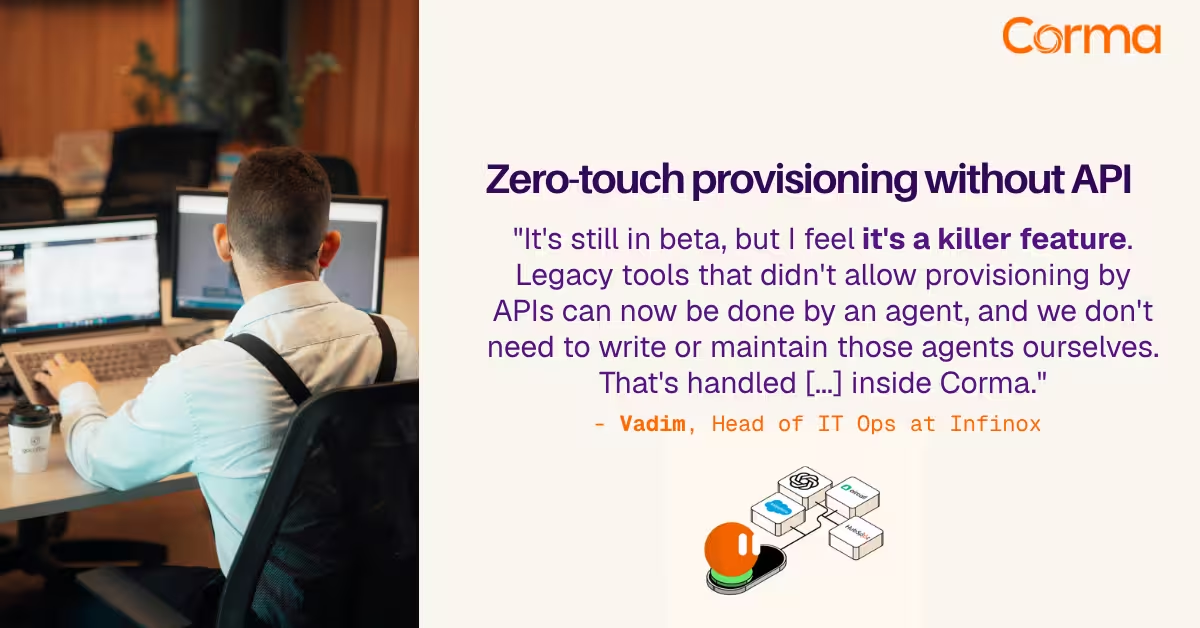
Corma’s custom agents in action at Infinox

SSPM : sécuriser la posture de sécurité de vos SaaS
Gestion des fournisseurs SaaS : maîtriser les renouvellements
The new standard in license management
Êtes-vous prêt à révolutionner votre gouvernance informatique ?